.intro-box { background: #fdf2f2; border: 1px solid #ffcdd2; padding: 25px; border-radius: 4px; margin-bottom: 40px; } .intro-box a { color: #d32f2f; font-weight: bold; text-decoration: none; } .intro-box a:hover { text-decoration: underline; }
.course-container { display: grid; grid-template-columns: 1fr; gap: 30px; } .course-card { background: #fafafa; border: 1px solid #eee; padding: 25px; border-radius: 8px; transition: box-shadow 0.3s ease; } .course-card:hover { box-shadow: 0 4px 15px rgba(0,0,0,0.05); border-color: #d32f2f; }
.category-tag { display: inline-block; background: #2c3e50; color: #fff; padding: 4px 12px; border-radius: 3px; font-size: 0.85em; margin-bottom: 10px; text-transform: uppercase; letter-spacing: 1px; } .midi-tag { background: #3498db; color: white; padding: 2px 8px; border-radius: 3px; font-size: 0.75em; vertical-align: middle; margin-left: 10px; }
p { margin-bottom: 15px; } ul { margin-bottom: 20px; padding-left: 20px; } li { margin-bottom: 10px; }
.footer-nav { margin-top: 60px; padding: 30px; border-top: 2px solid #eee; text-align: center; background: #f9f9f9; border-radius: 8px; } .footer-nav p { font-weight: bold; color: #222; }
code { background: #eee; padding: 2px 4px; border-radius: 3px; font-family: monospace; }
@media (max-width: 600px) { h1 { font-size: 2em; } }
/* Sticky Navigation Sidebar */ #hexatonic-sidebar { flex: 0 0 240px; background: #f9f9f9; padding: 25px; border-right: 4px solid #0056b3; height: fit-content; position: sticky; top: 30px; margin-right: 40px; } #hexatonic-sidebar h3 { font-size: 1.2em; margin-top: 0; color: #0056b3; } #hexatonic-sidebar ul { list-style: none; padding: 0; } #hexatonic-sidebar li { margin-bottom: 12px; } #hexatonic-sidebar a { text-decoration: none; color: #444; font-weight: 600; font-size: 0.95em; transition: 0.3s; } #hexatonic-sidebar a:hover { color: #0056b3; padding-left: 5px; }
/* Main Content Area */ #hexatonic-main { flex: 1; min-width: 320px; max-width: 850px; }
/* Fixed Hero Box - Now constrained and forced below the header */ .m-hero-box { position: relative; width: 100%; height: 400px; margin: 0px 0 40px 0; /* Margin on top prevents title overlap */ overflow: hidden; border-radius: 8px; display: block; } .m-hero-img { width: 100%; height: 100%; object-fit: cover; object-position: center; /* Centered for better alignment */ }
/* MUSE-EEK BADGE SYSTEM - PREVENTS BREAKING & THEME CONFLICTS */ .m-badge-new-tag, .m-badge-pop, .m-badge-soon { display: inline-block ; white-space: nowrap ; /* Forces "Coming Soon" to stay on one line */ padding: 3px 10px ; border-radius: 20px ; /* High number ensures round "pill" shape */ font-size: 11px ; font-weight: 800 ; text-transform: uppercase ; margin-left: 10px ; vertical-align: middle ; line-height: 1.2 ; color: #ffffff ; border: none ; text-decoration: none ; }
/* Color Enforcement with unique name for New */ .m-badge-new-tag { background-color: #28a745 ; background: #28a745 ; } .m-badge-pop { background-color: #007bff ; background: #007bff ; } .m-badge-soon { background-color: #e67e22 ; background: #e67e22 ; }
/* Clean Directory List Styles */ .dir-list { list-style: none ; padding: 0 ; margin: 0 ; }
.dir-item { display: flex ; align-items: center ; flex-wrap: nowrap ; /* Prevents badge from jumping down */ border-left: 4px solid #d9534f; /* Red border on the LEFT */ padding: 8px 0 8px 12px ; margin-bottom: 5px ; }
/* Ensure the link doesn't wrap and stays next to the badge */ .dir-item a { white-space: nowrap; overflow: hidden; text-overflow: ellipsis; /* Optional: adds "..." if title is extremely long */ }
Click any title below to jump directly to that course deep-dive.
The Comprehensive Guide to Modern Melodic and Harmonic Mastery
Welcome to the Hexatonic and Trichord Resource Guide, your definitive portal for mastering the “New Path” to modern improvisation. Whether you are diving deep into pitch class set theory or looking for specialized trichord ear training, this page organizes over 30 years of pedagogy into a clear, actionable roadmap.
For a deep dive into the underlying theory, please refer to our pillar resources:
Hexatonic and Pitch Class Set Improvisation | Hexatonics Scales the Complete Guide
Modern sound doesn’t have to be complicated. These courses are designed for musicians who want to start using exotic colors and contemporary textures immediately, with zero prior knowledge of Pitch Class Set theory required.
“Applying Pitch Class Set Chord Voicings to Traditional Harmony” provides a student interested in modernizing their chord playing with four pitch class sets that effective create a new and intriguing sound for playing traditional harmony. Common jazz standards are used to give you a fresh new sound. These voicings of course could be applied to any idiom.
Course Highlights:
Modal Application of Pitch Class Sets features a specialized collection of three-note chord voicings using pitch class sets 013, 015, 016, 025, 026, and 027 for guitar or piano. This course teaches you how to combine these sets to create sophisticated, non-tertian sounds reminiscent of Allan Holdsworth and Steely Dan. Highly versatile and modern, these voicings excel in any context—from contemporary country and jazz to modern classical compositions.
Course Highlights:
Modal Chromatic Pitch Class Sets explores sophisticated three-note voicings (013 through 027) enhanced with chromatic passing chords. Drawing from 30 years of professional experience, this course teaches you to create the “hip,” non-tertian sounds made famous by Allan Holdsworth and Steely Dan. Highly versatile and easy to apply, these textures transition seamlessly across jazz, rock, country, and contemporary classical music.
Course Highlights:
Applying 013 Chord Voicings bridges the gap between abstract pitch class sets and practical performance. Through 12 comprehensive études (one in every key), this course demonstrates how to apply 013 voicings to the standard II7–V7–I-7–VI7 progression. Perfect for guitarists, pianists, and composers, these lessons focus on sophisticated voice leading and re-harmonization techniques to create smooth, modern movement within traditional harmonic frameworks.
Course Highlights:
The architecture of the method. These resources provide the mathematical and structural maps for all 924 hexatonic scales and their internal trichord relationships, serving as the definitive reference for the modern improviser.
“The Sonic Resource Guide is the definitive roadmap for modern improvisation, distilling all possible pitch combinations into 220 manageable scales. This essential reference empowers musicians to derive every possible chord from any scale and master “outside” playing through advanced concepts like symmetric differences and subset groupings. Whether you are seeking new structural approaches or looking to enrich your harmonic vocabulary, this guide provides the deep technical insights needed to transform your improvisational voice.
Course Highlights:
The Ultimate 3 Note Chord Lexicon series moves beyond traditional chords built in 3rds to explore all 11 alternative ways to construct 3-note structures. These compact voicings are incredibly versatile, offering more substitution possibilities than larger chords across any musical style. Each volume provides specialized piano and guitar voicings, practical application charts, and études to help you master these modern sounds. (Note: Guitarists are encouraged to pair this with our Guitar Technique and Physiology course for optimal execution.)
Course Highlights:
Volume Two: The 013 Chord Lexicon is an essential resource focusing on what is arguably the most versatile structure in modern music. Historically significant and used extensively by John Coltrane, the 013 pitch class set can replace any chord type, functioning as both a consonant and dissonant texture depending on its voicing. Because it is found within Major, Melodic Minor, Harmonic Minor, and Diminished scales, the 013 is an easy-to-play yet powerful substitution tool for every improviser.
Course Highlights:
Volume Three: The 014 Chord Lexicon explores one of the most evocative and “edgy” structures in music. Famous for its heavy use in Thelonious Monk’s dissonant textures and Anton Webern’s compositions, the 014 is a powerhouse for modern Jazz and Heavy Metal. While primarily used as a striking dominant 7th substitute, it also functions perfectly as a Diminished 7 or Minor-Major 7 chord, making it an essential tool for creating sophisticated hexatonic scales and Symmetrical Diminished harmonies.
Course Highlights:
Finding the specific hexatonic scale you need shouldn’t be a hurdle to your practice. We’ve organized all 924 scales into a streamlined, searchable reference designed for the modern improviser. By focusing on the 50 Prime Forms, you’ll learn to see the underlying architecture behind every scale.
Course Highlights:
“Atomic Scales” is the definitive term for Charlie Banacos’ specialized patterns for hexatonic mastery. This course is crucial for internalizing scales by dividing them into two distinct trichords (triad pairs), providing a clear, systematic path to fluid execution.
Course Highlights:
Explore the full spectrum of 36 trichord pair permutations derived from all 924 possible hexatonic combinations. Scales are categorized into seven harmonic families (Major, Melodic Minor, Harmonic Minor, etc.) for targeted practice. Available in Treble and Bass clef with full MIDI support.
Course Highlights:
A streamlined, essential listing of the 10 specific trichord pairs that comprise each of the 924 hexatonic scales. This is a vital resource for players looking to break down complex scales into manageable, “grippable” three-note cells across all keys.
Course Highlights:
Master the internal architecture of melody. By grouping all 924 scales into their 50 parent Prime Forms, this course reveals the hidden relationships between seemingly unrelated scales, allowing you to organize your harmonic vocabulary more efficiently.
Course Highlights:
A complete guide to the vertical application of hexatonic scales. Learn to voice and play every possible three-note chord derived from the hexatonic system across all 12 keys and inversions.
Course Highlights:
The first level of Charlie Banacos’ “Double Mambos” concept. This course presents six essential sequencing patterns across all keys and harmonic categories. It is the perfect entry point for musicians seeking to move past simple scale runs into sophisticated modal shapes.
Course Highlights:
An advanced fusion of two classic Banacos techniques. By adding approach notes to the Level 1 Atomic Scales, this course builds the “Post-Bebop” vocabulary used by icons like John Coltrane and Eric Dolphy. Gain complete control over chromaticism and scale-degree targeting.
Course Highlights:
This course divides each scale into three distinct 2-note patterns. This unique approach opens up a new melodic universe, offering intervals and contours that standard scale-wise playing cannot achieve. Includes PDF and MIDI for all 12 keys
Course Highlights:
Transform theory into melody. This section features our extensive series of études and application guides, teaching you how to use specific pitch class sets to navigate modern jazz, modal, and chromatic environments.
Time Transformation is designed for students ready to move beyond conventional melodic and rhythmic patterns. This course explores a new frontier of improvisation based on contemporary pitch class sets, asymmetrical phrasing, and time-level superimposition. By utilizing 027 trichords and 12-tone aggregates, students will develop the technical and conceptual tools required for modern performance.
Course Highlights:
The Set Theory Ensemble Book series provides a roadmap for musicians looking to break free from traditional patterns. By focusing on non-tertial melodic lines that weave in and out of tonal centers, this course teaches you the backbone of modern improvisation. Through 12 targeted etudes using 027 027 pitch class sets, you will discover fresh melodic possibilities for Major 7, Minor 7, and Dominant 7th sus4 chords.
Course Highlights:
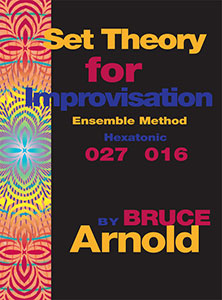
Ready to develop a groundbreaking approach to your solos? The Set Theory Ensemble Book series teaches you to build modern, hexatonic melodies using non-tertial lines that move fluidly in and out of the key center. By focusing on 027 016 pitch class sets, this volume provides the essential tools for creating sophisticated melodic lines over complex chord structures.
Course Highlights:
Tertial Intervallics Volume One teaches you to harness the power of repetitive intervals to create cohesive, modern melodic lines. By utilizing consistent four-note structures (7th chords) over varying harmonic backgrounds, your ear begins to perceive the “pattern” as the primary logic, allowing for sophisticated movement through any key center.
Course Highlights:
Included Materials:
Unlock a modern, sophisticated sound with 013 Hexatonic Études. This course focuses on the “pivot” technique—alternating between two three-note groups (013 pitch class sets) to create fresh, non-traditional melodies. Designed specifically for Dominant 7th chords, these exercises help you break out of common patterns and master one of music’s most essential harmonic structures.
Course Highlights:
Included Materials:
Symmetrical Trichord Pairs is an 847-page exhaustive reference guide exploring the formation of two three-note groups with identical structures. By focusing on chord tones and available tensions (avoiding “avoid notes”), this book provides a roadmap for “safe” yet highly sophisticated modern improvisation. From the 027 structures favored by modern jazz and metal players to the dissonant 013 sets used in avant-garde rock, this book helps you find your personal sonic identity within 574 possible combinations.
Course Highlights:
How to Master Symmetrical Pairs:
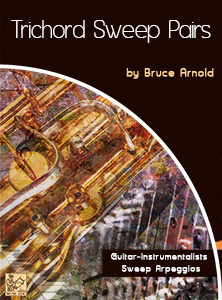
Trichord Sweep Pairs is the ultimate resource for guitarists and instrumentalists looking to master modern sweep picking. By stacking two identical 3-note structures (trichords), this course moves past basic triads into 2,440 pages of unique, cutting-edge sweep patterns. Whether you play Jazz, Metal, or Fusion, these patterns provide a logical, mathematical approach to mastering the entire fretboard.
Course Highlights:
What’s Included:
Are you ready to move past tired arpeggio patterns? Tertial Octatonics provides a modern alternative by exploring the full potential of eight-note scales. By using two tetrads (4-note chords) as a vehicle, this course teaches you how to create cutting-edge sounds over Dominant 7th and Dominant 7sus4 key centers, expanding your harmonic palette far beyond the standard diminished scales.
Course Highlights:
What You’ll Receive:
Using the concept of “Symmetrical Difference,” this course presents all hexatonic scales as part of 12-tone aggregate lines. The result is a collection of melodic phrases of immense complexity and modern beauty.
Course Highlights:
Bridging the gap between the mind and the fingers. These technical manuals focus on the physical mechanics required to execute 3-note and 6-note groupings with speed, clarity, and rhythmic precision.
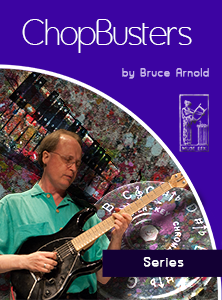
The ChopBuster series is a comprehensive collection of 18 specialized volumes designed to bridge the gap between abstract set theory and fluid physical execution. By focusing on specific pitch-class sets (such as 013, 027, and 013679) and structured “Pyramid” or “Rotation” routines, these exercises provide a systematic path to mastering modern improvisational shapes. Whether you are navigating diatonic chords of the major modes, symmetrical diminished structures, or complex trichord sequences, the series offers a rigorous workout for all instrumentalists looking to expand their technical and harmonic range.
Course Highlights:
Improvisation, Composition, Ear Training, Sight Singing
The Harmonic and Melodic Equivalence Series is a groundbreaking collection of courses dedicated to the art of Pitch Class Set Improvisation. By isolating and exploring 44 unique two-triad and two-trichord pairs, this series provides a systematic bridge between abstract set theory and practical application. These combinations are selected specifically for their modern melodic contours and harmonic depth, reflecting the sophisticated vocabulary used by advanced composers and improvisers.
More than just a technical manual, this series serves as a high-level ear training and sight-singing resource. By working through these exercises against a fixed key center (supported by MetroDrone® technology), musicians learn to internalize complex structures without losing their harmonic anchor. Whether you are a composer looking for new textures or a performer aiming for “Post-Bebop” fluency, this series offers a unique and comprehensive path to mastery that is currently unmatched in contemporary music education.
Course Highlights:
This massive resource provides a “birds-eye view” of the entire 12-tone system by organizing a vast collection of trichord pairs under their respective parent scales and Prime Forms. By understanding the “parent” structure of a trichord pair, musicians can better organize their practice and see the hidden connections between different melodic shapes. This course is essential for players who want to simplify complex harmonic relationships and develop a more structured approach to modern improvisation across the entire chromatic spectrum.
Course Highlights:
This course provides a systematic map of every three-note subset hidden within Charlie Banacos’ legendary chord tone and tension lists. Designed to help musicians “mushroom” their existing vocabulary, the system shows you how to take a simple melodic idea and transpose it onto sophisticated harmonic structures to create cutting-edge colors with ease. By bridging the gap between basic shapes and complex tensions, this resource allows you to navigate modern jazz and contemporary fusion harmonies with total confidence and a refined sonic palette.
Course Highlights:
This course is designed to bridge the gap between abstract theory and real-world performance. By applying the “mushrooming” concept to standard turnaround progressions, these etudes provide a practical path to mastering modern jazz colors. The curriculum is structured to challenge your fluency, moving from exercises with a full-measure focus to rapid, two-beat changes. This systematic approach ensures that you can navigate common harmonic shifts with the sophisticated, cutting-edge vocabulary used by today’s top improvisers.
Course Highlights:
Fretboard-specific mastery. These resources translate complex hexatonic concepts specifically for the guitar, focusing on unique fingerings, arpeggio shapes, and fretboard visualization techniques.
Unlock the potential of the most influential pitch class set in modern jazz and contemporary music. This course provides a deep dive into the 013 structure, specifically targeting its application over Dominant 7th chords to create high-level melodic vocabulary. Through a series of specialized études, you will learn to navigate these sophisticated shapes with confidence, gaining the “cutting-edge” sound used by elite modern improvisers to break away from traditional scale-based playing.
Course Highlights:
If you can’t hear it, you can’t play it. Using the renowned Muse-Eek method, these courses train your ear to recognize modern tonal relationships and internalize the unique “colors” of every trichord and hexatonic scale.
Inspired by the legendary Charlie Banacos, SerialEar is a transformative ear training method that moves beyond isolated intervals to teach you how to hear the fundamental three-note “DNA” of modern music. By practicing these sounds against a constant drone, you learn to map the entire 12-tone clock relative to a singular harmonic “Home.” This course functions as a daily meditation on resonance, designed to create total transparency between your ear, your mind, and your instrument. It is an incredibly rich resource that bridges the gap between pure ear training and high-level improvisation, allowing you to master every possible three-note combination found in music.
Course Highlights:
A high-level challenge for the serious ear. You are presented with a trichord-pair key center—ranging from standard progressions to highly dissonant clusters—and asked to identify a single pitch. This builds the ability to recognize tonal centers in even the most exotic harmonic environments.
Beyond improvisation. Explore how to use these modern tools to craft original music, using symmetrical logic and set theory to develop a unique and sophisticated compositional voice.
This course is a comprehensive collection of the advanced methods I’ve employed over the last 25 years to push the boundaries of improvisation. It bridges the gap between high-level theory and practical facility, providing technical exercises, scores from my original compositions, and 20 audio recordings to demonstrate these systems in rock, blues, jazz, and classical idioms.
Course Highlights:
Achieve a strikingly original sound by applying late 20th-century 12-tone compositional methods to jazz improvisation. Bruce Arnold explains how to move past traditional tertial harmony using trichords to create fresh, non-standard musical structures. Whether you want to replace traditional chords entirely or find sophisticated substitutes for forms like the 12-bar blues, this book provides a highly organized roadmap for the contemporary composer and improviser.
Course Highlights:
Spanning nearly 30 years of creative output (1990–2018), this collection features 90 compositions across a vast landscape of styles, including Jazz, Funk, Rock, Metal, Country, and Blues. This is an essential resource for any musician looking to see the real-world application of Pitch Class Set theory, with many charts including specific set listings and improvisational guides used by Bruce Arnold himself.
Course Highlights: