


Harmonic and Melodic Equivalence V5 Two Triad Pair
Harmonic and Melodic Equivalence V5 Two Triad Pair
Status: In stock, Digital book is available for immediate access.
Harmonic and Melodic Equivalence Exercises
Part of the Harmonic and Melodic Equivalence Series
Harmonic and Melodic Equivalence V5 Two Triad Pair is part of a series of books on Pitch Class Set Improvisation called Harmonic and Melodic Equivalence. V5 Two Triad Pair is divided up into two sets of exercises written in treble and bass clef. The 1st set of exercises gets gradually harder but also more musical. Depending upon your musical skills you can start anywhere you want but for beginners I would recommend starting from the 1st exercise of the five.
The 2nd set of Pitch Class Set Improvisation exercises are called “Atomic Scales.” These exercises are a technical exercise that really helps you to learn these ideas but also sound great as a melody right off the bat. There are 6 different types of “Atomic Scales” exercises in this course. You don’t have to play every exercise in every key. But doing this will greatly increase the likelihood of you using it in real music in the future. Below is a listing of the exercises found in this course:
- Closed position studies.
- 1st inversion studies.
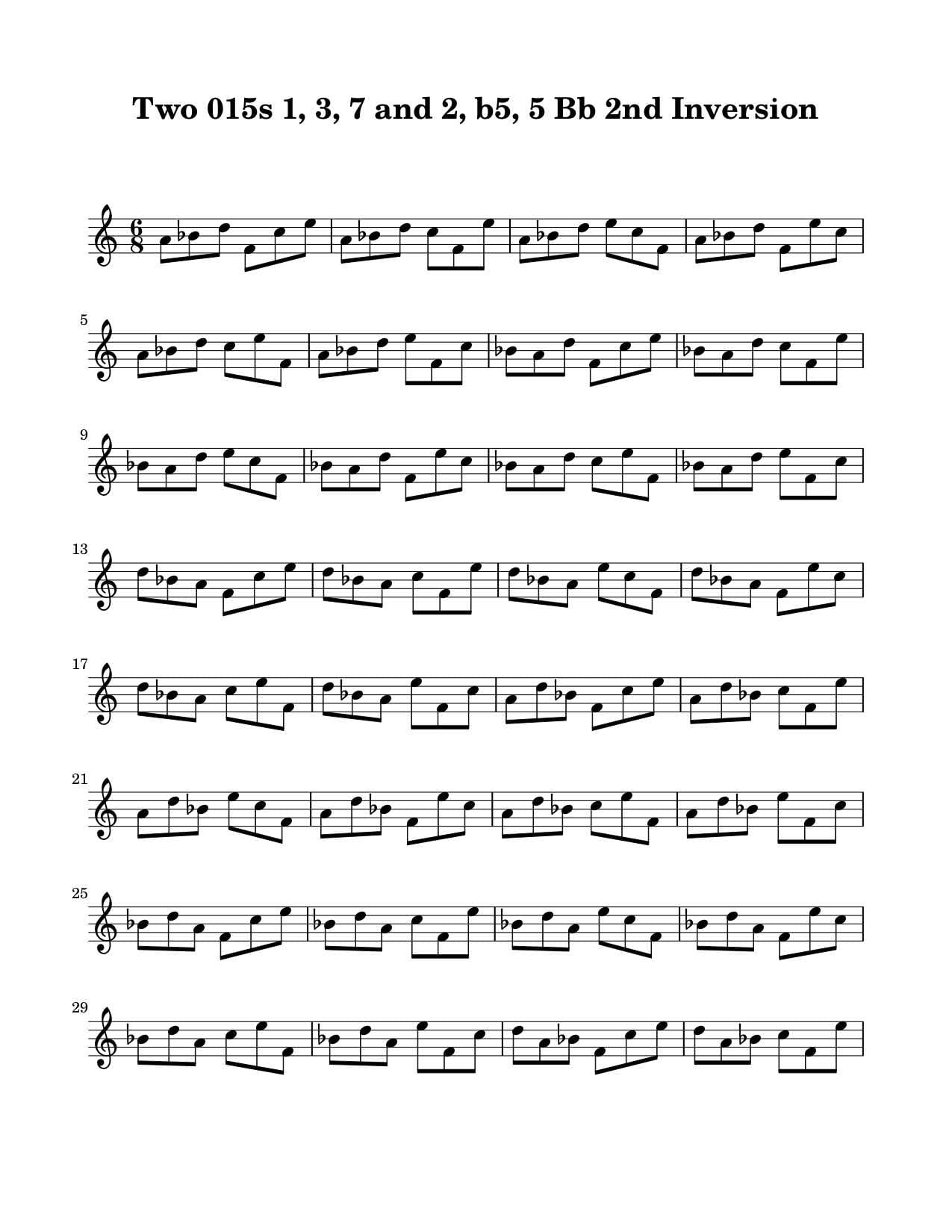
- 2nd inversion studies.
- Random combinations of closed position along with 1st and 2nd inversion.
- Random combinations of closed position along with 1st and 2nd inversion with rhythmic displacement.
- Atomic Scales Exercise 1
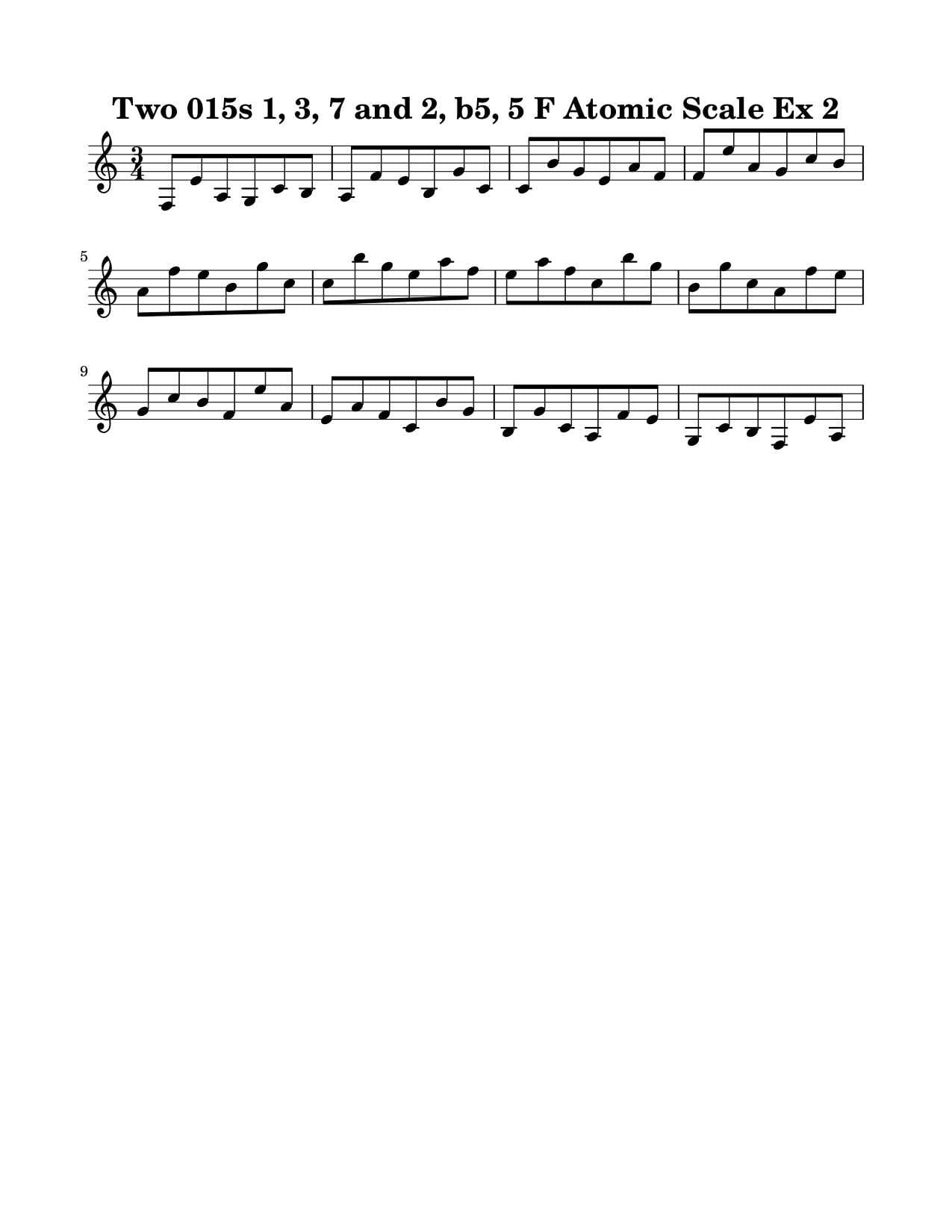
- Atomic Scales Exercise 2
- Atomic Scales Exercise 3
- Atomic Scales Exercise 4
- Atomic Scales Exercise 5
- Atomic Scales Exercise 6
Explanation of 2nd Set of Exercises in Harmonic and Melodic Equivalence V5 Two Triad Pair Course
Below is an explanation for each set of the 6 different atomic scale exercises found in this course. Three octave sequences that move back and forth between the two 3 note groups are presented in six different configurations.
These Pitch Class Set Improvisation exercises are highly melodic and can be used verbatim as melodies when soloing. If we thought of the three notes as A,B,C then there would be six different ways to combine these notes. i.e. ABC, ACB, BAC, BCA, CAB and CBA. All exercises include MP3s as well as midi files so that you can hear and play these exercises at any tempo as well as versions in all 12 keys.
- Three octave sequences that move back and forth between the two 3 note groups in the ABC sequence
- Three octave sequences that move back and forth between the two 3 note groups in the ACB sequence
- Three octave sequences that move back and forth between the two 3 note groups in the BAC sequence
- Three octave sequences that move back and forth between the two 3 note groups in the BCA sequence
- Three octave sequences that move back and forth between the two 3 note groups in the CAB sequence
- Three octave sequences that move back and forth between the two 3 note groups in the CBA sequence
1st Set of Exercises in Harmonic and Melodic Equivalence V5 Two Triad Pair Course
Here are a few examples from the 1st set of exercises. A complete list of the different types of Pitch Class Set Improvisation exercises can also be found below.
Closed Position Exercise

MP3 example
1st Inversion Exercise

MP3 example
2nd Inversion Exercise
MP3 example
Random combinations of closed position along with 1st and 2nd inversion.

MP3 example
Random combinations of closed position along with 1st and 2nd inversion and rhythm permutation

MP3 example
2nd Set of Exercises in Harmonic and Melodic Equivalence V5 Course
Here are a few examples from the 2nd set of exercises.
Atomic Scales 1st Rotation

MP3 example
Atomic Scales 2nd Rotation
MP3 example
Atomic Scales 3rd Rotation

MP3 example
Atomic Scales 4th Rotation

MP3 example
Atomic Scales 5th Rotation

MP3 example
Atomic Scales 6th Rotation

MP3 example
TOC in the Harmonic and Melodic Equivalence V5 Two Triad Pair Course:
- How to Use This Course
- Harmonic/Melodic Possibilities of Two 015s
- Chord Possibilities of Two 015s
- Rotations Starting on Every Eighth Note
- Two 015s in Modal Playing
- How to Think of the 015s Used in This Course
- 015 Daily Exercise-Atomic Scales
- Thinking of the Trichords as Modes
- Thinking of the Trichords as One Scale
- C, E, B and D, F#, G as One Scale in All Keys
- Additional Practice Ideas
Get Harmonic and Melodic Equivalence V5 Two Triad Pair Today!
Status: In stock, Digital book is available for immediate access.
Additional Information for Harmonic and Melodic Equivalence V5 Two Triad Pair:
- Digital Edition 978-1-59489-340-7
- One 11 page PDF explaining exercises, 5 different types of exercises, 328 pages of exercises in PDF format in treble and bass clef
- MP3’s and Midi files for all exercises.
- 12 MP3s from Tuba MetroDrone®
What people are saying:
Bruce I just wanted to write in to tell you how much I’m enjoying this new course. 015 has such a beautiful sound and two of them together is awesome! J. Ogland
As each new volume comes out in this series I’m struck by unique characteristic of each combination and how they can be used to replace our normal harmonic system. A real eye opener for those musicians who are striving for something new. A. Williams
Hey Bruce just a quick email to let you know how much I’m enjoying the Harmonic and Melodic Equivalence Series. Using them both to get new ideas and for ear training. It interesting to use these books for singing exercises. The ones you would think would be easy like the Volume 19A gets to be really difficult as you try these patterns over various keys. W. Opperheim
Keep up the good work Bruce. These books are giving a whole new insight into a new and intriguing sound! W. Young

Bruce Arnold Guitarist Performing in NYC with Music Man Guitar