Part of the Harmonic and Melodic Equivalence Series
Harmonic and Melodic Equivalence V14D Two Triad Pair is part of a series of books on Pitch Class Set Improvisation called Harmonic and Melodic Equivalence. V14D Two Triad Pair examines a two 3 note pair that works over a both a diminished and harmonic minor scale. This is just the tip of an iceberg with this course because this combination is jam packed with awesome applications and is a must own in my opinion.
The scale formed by this six notes, as well as using the two 3 note pairs, can be used as harmonic reharmonization. This specific book has a massive amount of reharmonization potential and is truly one of the unique book from the Harmonic and Melodic Equivalence Series.
Two 3 note pairs and also be called “two trichords.” Two trichords which unlike a two triad pair are not build in thirds. The term was coined by Milton Babbitt to distinguish a three note collection from a triad built in 3rds. Trichords form a sound that is very useful to a modern improviser both as melodic and harmonic content. Through the Harmonic and Melodic Equivalence Series these trichords are studied in-depth. I think you will find them to be a welcome addition to your improvisational palette.
“Harmonic and Melodic Equivalence Trichord Pair” is a series of Pitch Class Set Improvisation books that will help you to develop many different musical skills simultaneously. The source materials for this book are exercises that contain two 3 note groupings which are not built in thirds. First a little background, “two triad pairs” consist of two 3 note groupings that are built in 3rds. These combinations typically use a major, minor, diminished or augmented triad and when grouped into a collection of two are called a “two triad pair.”
A trichord pair on the other hand takes any of the 9 other possible 3 note combinations and builds pairs using these pitch class sets. These include 012, 013, 014, 015, 016, 024, 025, 026 and 027. Any three note group can be referred to as a “trichord” but is more commonly used when speaking of a three note grouping not built in thirds. Trichords can also be referred to as non-tertial two triad pairs.
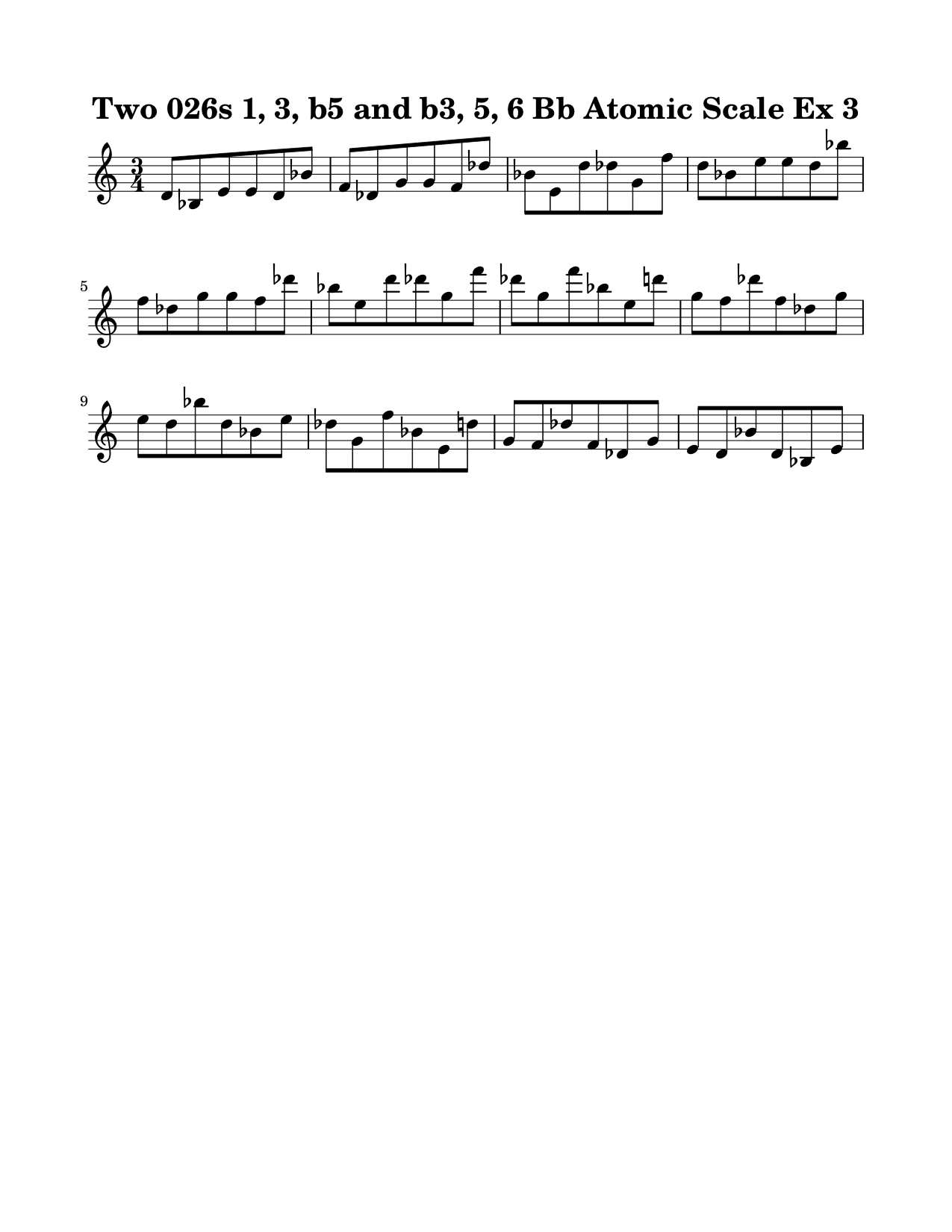
The Pitch Class Set Improvisation exercises found in this course use many different types of harmonic and melodic ideas that can be superimposed over common chord progressions, scales and other musical situations. This course concentrates on using a two 026 pitch class sets.
An example of that would be C, E, F# and Eb, G, A. Notice that these six notes form part of both a diminished and harmonic minor scale. This combination is extremely useful for an improvising musician and the book contains many examples of how to apply this combination to different situations. There are also many charts included in this course to show you how these notes function in all 12 keys.
The Pitch Class Set Improvisation and the two trichord books are unique to the Muse Eek Publishing Inc. catalog. The various non-tertial two triad pairs found in this collection are both beautiful and highly applicable to modern improvisation. They work well as a melodic and harmonic device and Mr. Arnold has written a body of work through both recordings, videos and books dedicated to these non-tertial combinations.
As with all of Mr. Arnold’s books there is a sharp focus on the ear training and the “Harmonic and Melodic Equivalence Two Trichord” Series is no different. Each exercise or chart is always relating back to the idea of how you would hear these notes within a key center.
This book includes a section where the two trichord pair are put into common chord progressions but more importantly shows you how these progressions relate to the overall key center. Learning music based on how your hear it rather than relating everything to a chord by chord approach is the rosetta stone of music. This is the secret to the previously undecipherable mystery of understanding music from an aural perspective.
This course is part of the Harmonic and Melodic Equivalence Series which explores Pitch Class Set Improvisation. In this case the exploration is over 50 different either trichord pairs or two triad pairs. To see all volumes follow the link above to explore each volume and hear examples from each course as well as finding links to compositions that I’ve written using each combination.
This course is divided up into two sets of Pitch Class Set Improvisation exercises written in treble and bass clef. The 1st set of exercises gets gradually harder but also more musical. Depending upon your musical skills you can start anywhere you want but for beginners I would recommend starting from the 1st exercise of the five. The 2nd set of exercises are called “Atomic Scales.”
These exercises are a technical exercise that really helps you to learn these ideas but also sound great as a melody right off the bat. There are 6 different types of “Atomic Scales” exercises in this course. You don’t have to play every exercise in every key. But doing this will greatly increase the likelihood of you using it in real music in the future. Below is a listing of the exercises found in this course:
Below is an explanation for each set of the 6 different atomic scale exercises found in this course. Three octave sequences that move back and forth between the two 3 note groups are presented in six different configurations.
These exercises are highly melodic and can be used verbatim as melodies when soloing. If we thought of the three notes as A,B,C then there would be six different ways to combine these notes. i.e. ABC, ACB, BAC, BCA, CAB and CBA. All exercises include MP3s as well as midi files so that you can hear and play these exercises at any tempo as well as versions in all 12 keys.
Here are a few examples from the 1st set of exercises. A complete list of the different types of exercises can also be found below.
Closed Position Exercise
MP3 example
1st Inversion Exercise
MP3 example
2nd Inversion Exercise
MP3 example
Random combinations of closed position along with 1st and 2nd inversion.
MP3 example
Random combinations of closed position along with 1st and 2nd inversion and rhythm permutation
MP3 example
Here are a few examples from the 2nd set of exercises.
Atomic Scales 1st Rotation
MP3 example
Atomic Scales 2nd Rotation
MP3 example
Atomic Scales 3rd Rotation
MP3 example
Atomic Scales 4th Rotation
MP3 example
Atomic Scales 5th Rotation
MP3 example
Atomic Scales 6th Rotation
MP3 example
Additional Information for Harmonic and Melodic Equivalence V11D Two Triad Pair:
Harmonic and Melodic Equivalence Books are part of the Pitch Class Set Improvisation Series
Hey Bruce, These last two 026 books i.e. Harmonic and Melodic Equivalence 11C and 11D are really the most useful combination that you have released so far. Between the two I’m covering almost all harmony commonly used in modern improvisation. Very cool and thanks for showing me these. I would have never thought of them on my own! J. Ogland
Just wanted to drop you an email to express my thanks for creating this Harmonic and Melodic Equivalence Series Although I’ve found some of this information in other books and website.
I’ve found nothing so comprehensive and your addition of ways to form chord progressions with these two 3 note combinations is something I haven’t found anywhere but is the main thing I’m currently using to work on play over changes. Really appreciate the information. J. Drews
Wow Bruce this course and 11C are fantastic! I never knew that so much hip stuff could come from these trichord pairs. I’m spending a week on each volume. Obviously not enough to totally get it down but I’ve been at it for months now and I’m really noticing a new language starting to develop in my playing! R. Mann
Octatonic Chords by Bruce Arnold Diatonic Chords for 124 Eight Note Scales From the Pitch…
495 Eight Note Scales in all 12 keys by Bruce Arnold This is part of…
Segmenting Bebop Scales with Approach Notes by Bruce Arnold by Bruce Arnold 124 Eight Note…
Segmenting Bebop Scales 124 Ascending and Descending Permutations by Bruce Arnold Part of the Octatonics…
Bebop Scales 124 Bebop Scales and Their Application Add digital copy to cart - $19.99…
Octatonics and courses dealing with Octatonic Scales, Chords, Tetrads and Bebop Scales by Bruce Arnold…