


Harmonic and Melodic Equivalence V11A Two Triad Pair by Bruce Arnold
Part of the Harmonic and Melodic Equivalence Series
Harmonic and Melodic Equivalence V11A Two Triad Pair is part of a series of books on Pitch Class Set Improvisation called Harmonic and Melodic Equivalence. V11A Trichord Pairs examines a two 3 note pair that works over a whole tone scale This is the first of 6 courses in the V11 series that deal with a three note pair that works with two 026 (whole step and tritone) pitch class sets. This two 3 note pair is an excellent way to find fresh new melodies using a whole tone scale.
The concept of the Harmonic and Melodic Equivalence V11A Two Triad Pair is essential for understanding modern music theory.
Two Trichords
Two 3 note pairs and also be called “two trichords.” Two trichords which unlike a two triad pair are not build in thirds. The term was coined by Milton Babbitt to distinguish a three note collection from a triad built in 3rds. Trichords form a sound that is very useful to a modern improviser both as melodic and harmonic content. Through the Harmonic and Melodic Equivalence Series these trichords are studied in-depth. I think you will find them to be a welcome addition to your Pitch Class Set Improvisation palette.
Harmonic and Melodic Equivalence V11A Two Triad Pair
The Harmonic and Melodic Equivalence V11A Two Triad Pair serves as a foundational element in many contemporary compositions.
Status: In stock, Digital book is available for immediate access.
Background Information on a Two Triad Pair or Two Trichords
“Harmonic and Melodic Equivalence Two Triad Pair” is a series of books that will help you to develop many different musical skills simultaneously. The source materials for this book are exercises that contain two 3 note groupings which are not built in thirds. First a little background, “two triad pairs” consist of two 3 note groupings that are built in 3rds. These combinations typically use a major, minor, diminished or augmented triad and when grouped into a collection of two are called a “two triad pair.”
Exploring the Harmonic and Melodic Equivalence V11A Two Triad Pair can enhance your improvisational skills.
A trichord pair on the other hand takes any of the 9 other possible 3 note combinations and builds pairs using these pitch class sets. These include 012, 013, 014, 015, 016, 024, 025, 026 and 027. Any three note group can be referred to as a “trichord” but is more commonly used when speaking of a three note grouping not built in thirds. Trichords can also be referred to as non-tertial two triad pairs.
Understanding the nuances of the Harmonic and Melodic Equivalence V11A Trichord Pair will broaden your musical horizons.
The Pitch Class Set Improvisation exercises found in this course use many different types of harmonic and melodic ideas that can be superimposed over common chord progressions, scales and other musical situations. This course concentrates on using a two 026 pitch class sets. An example of that would be C, D, A and E, Ab, Bb.
As you probably notice these six notes form a whole tone scale. This combination is great for playing over a dominant chord it is also a good tool to use to superimpose chord changes. The course contains many ideas on how to implement this idea. There are also many charts included in this course to show you how these notes function in all 12 keys.
Utilizing the Harmonic and Melodic Equivalence V11A Trichord Pair in practice can lead to exciting musical discoveries.
Unique Aspect of These Two Trichord Books
The two trichord books are pretty unique to the Muse Eek Publishing Inc. catalog. The various non-tertial two triad pairs found in this collection are both beautiful and highly applicable to modern improvisation. They work well as a melodic and harmonic device and Mr. Arnold has written a body of work through both recordings, videos and books dedicated to these non-tertial combinations. As with all of Mr. Arnold’s books there is a sharp focus on the ear training and the “Harmonic and Melodic Equivalence Two Trichord” Series is no different.
Many musicians find the Harmonic and Melodic Equivalence V11A Trichord Pair to be an innovative tool for composition.
Each Pitch Class Set Improvisation exercise or chart is always relating back to the idea of how you would hear these notes within a key center. This book includes a section where the two trichord pair are put into common chord progressions but more importantly shows you how these progressions relate to the overall key center. Learning music based on how your hear it rather than relating everything to a chord by chord approach is the rosetta stone of music. This is the secret to the previously undecipherable mystery of understanding music from an aural perspective.
Harmonic and Melodic Equivalence Series
This course is part of the Harmonic and Melodic Equivalence Series which explores over 50 different either trichord pairs or two triad pairs. To see all volumes follow the link above to explore each volume and hear examples from each course as well as finding links to compositions that I’ve written using each combination.
The exercises in this course incorporate the Harmonic and Melodic Equivalence V11A Trichord Pair, making it invaluable for learners.
Harmonic and Melodic Equivalence Exercises
This course is divided up into two sets of exercises written in treble and bass clef. The 1st set of exercises gets gradually harder but also more musical. Depending upon your musical skills you can start anywhere you want but for beginners I would recommend starting from the 1st exercise of the five. The 2nd set of exercises are called “Atomic Scales.”
By practicing with the Harmonic and Melodic Equivalence V11A Two Triad Pair, you can refine your musical technique.
These Pitch Class Set Improvisation exercises are a technical exercise that really helps you to learn these ideas but also sound great as a melody right off the bat. There are 6 different types of “Atomic Scales” exercises in this course. You don’t have to play every exercise in every key. But doing this will greatly increase the likelihood of you using it in real music in the future. Below is a listing of the exercises found in this course:
-
- Closed position studies.
- 1st inversion studies.
Exploration of the Harmonic and Melodic Equivalence V11A Trichord Pair can inspire your improvisation style.
- 2nd inversion studies.
- Random combinations of closed position along with 1st and 2nd inversion.
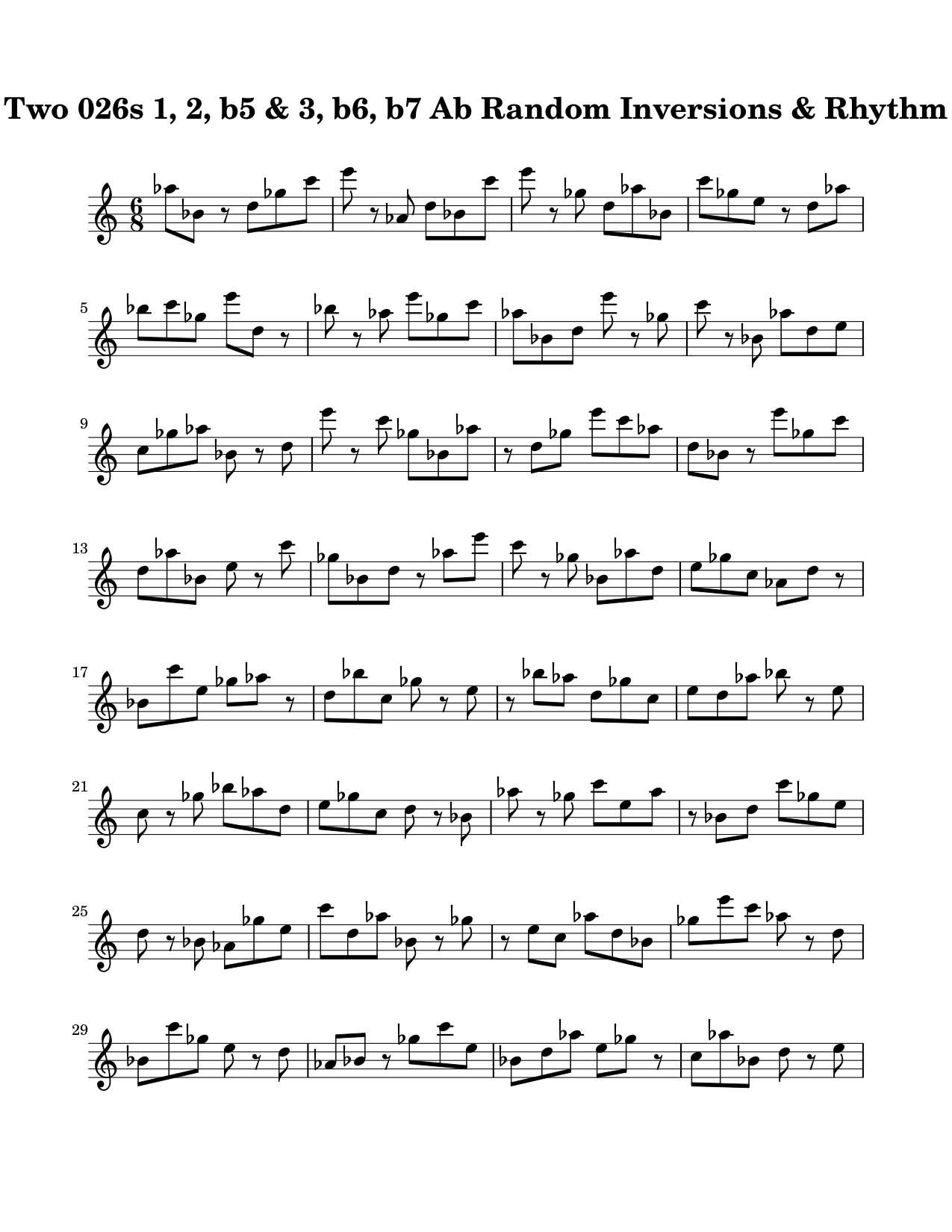
- Random combinations of closed position along with 1st and 2nd inversion with rhythmic displacement.
- Atomic Scales Exercise 1
- Atomic Scales Exercise 2
- Atomic Scales Exercise 3
- Atomic Scales Exercise 4
- Atomic Scales Exercise 5
- Atomic Scales Exercise 6
Explanation of 2nd Set of Exercises in Harmonic and Melodic Equivalence V11A Two Triad Pair Course
Below is an explanation for each set of the 6 different atomic scale exercises found in this course. Three octave sequences that move back and forth between the two 3 note groups are presented in six different configurations. These exercises are highly melodic and can be used verbatim as melodies when soloing. If we thought of the three notes as A,B,C then there would be six different ways to combine these notes. i.e. ABC, ACB, BAC, BCA, CAB and CBA. All exercises include MP3s as well as midi files so that you can hear and play these exercises at any tempo as well as versions in all 12 keys.
- Three octave sequences that move back and forth between the two 3 note groups in the ABC sequence
- Three octave sequences that move back and forth between the two 3 note groups in the ACB sequence
- Three octave sequences that move back and forth between the two 3 note groups in the BAC sequence
- Three octave sequences that move back and forth between the two 3 note groups in the BCA sequence
- Three octave sequences that move back and forth between the two 3 note groups in the CAB sequence
- Three octave sequences that move back and forth between the two 3 note groups in the CBA sequence
1st Set of Exercises in Harmonic and Melodic Equivalence V11A Two Triad Pair Course
Here are a few examples from the 1st set of exercises. A complete list of the different types of exercises can also be found below.
Closed Position Exercise

MP3 example
1st Inversion Exercise

MP3 example
2nd Inversion Exercise

MP3 example
Random combinations of closed position along with 1st and 2nd inversion.

MP3 example
Random combinations of closed position along with 1st and 2nd inversion and rhythm permutation
MP3 example
2nd Set of Exercises in Harmonic and Melodic Equivalence V11A Two Triad Pair Course
Here are a few examples from the 2nd set of exercises.
Atomic Scales 1st Rotation

MP3 example
Incorporating the Harmonic and Melodic Equivalence V11A Two Triad Pair in your practice routine can yield great results.
Atomic Scales 2nd Rotation

MP3 example
Atomic Scales 3rd Rotation
Many find that the Harmonic and Melodic Equivalence V11A Two Triad Pair enhances their musical creativity.

MP3 example
Atomic Scales 4th Rotation

MP3 example
Understanding the Harmonic and Melodic Equivalence V11A Two Triad Pair will help unlock new compositional ideas.
Atomic Scales 5th Rotation

MP3 example
Atomic Scales 6th Rotation
This course provides insight into the applications of the Harmonic and Melodic Equivalence V11A Two Triad Pair.

MP3 example
TOC in the Harmonic and Melodic Equivalence V11A Two Triad Pair Course:
- How to Use This Course
- Harmonic/Melodic Possibilities of an 026 and 026 combination.
- Chord Possibilities of this 026 and 026 combination
- Two triad pairs rotations Starting on every eighth note
- How to think of these an 026 and 026 combinations that are used in this course
- The 026 and 026 combination Daily Exercise-Atomic Scales
- Thinking of these two triad pairs as applications to Modes
- Thinking of these two triad pairs as One Scale
- C, D, A and E, Ab, Bb as One Scale in All Keys
- Forming chord progressions with two triad pairs
- Forming extended chord progressions with two triad pairs
- Choosing chord progressions from two triad pairs
- Additional practice ideas
Get Harmonic and Melodic Equivalence V11A Two Triad Pair Today!
Status: In stock, Digital book is available for immediate access.
Additional Information for Harmonic and Melodic Equivalence V11A Two Triad Pair:
- Digital Edition 978-1-59489-260-8
- One 14 page PDF explaining exercises, 5 different types of exercises, 328 pages of exercises in PDF format in treble and bass clef.
- Information and examples of forming extended chord progressions with this two triad pair.
- MP3’s and Midi files for all exercises.
- 12 MP3s from Tuba MetroDrone®
What people are saying:
Hey Bruce, back with my weekly take on your new release. This 026-026 for a whole tone scale is really interesting. I never thought about segmenting a whole tone scale like this. It gives it such a fresh sound! Can’t wait to dig into this and apply it to various situations. Thanks again! J. Ogland
I own all the courses in the Harmonic and Melodic Equivalence Series. Just wanted to thank you for providing these books because I’ve really found them helpful for finding new melodic ideas for improvisation. Each book is massive and I hope to get to everything in these books sooner or later but just dabbling in each one gives me tons of new ideas! B. Edwards
This is such a cool way to play a whole tone scale. I’ve often skipped over the whole tone scale because it sounds so much like a lick when I play it but these 026 combinations really disguise the scale and make it interesting. Thanks for publishing this set. A. Manny

Guitarist and Author Bruce Arnold’ playing a music man guitar performing in NYC