

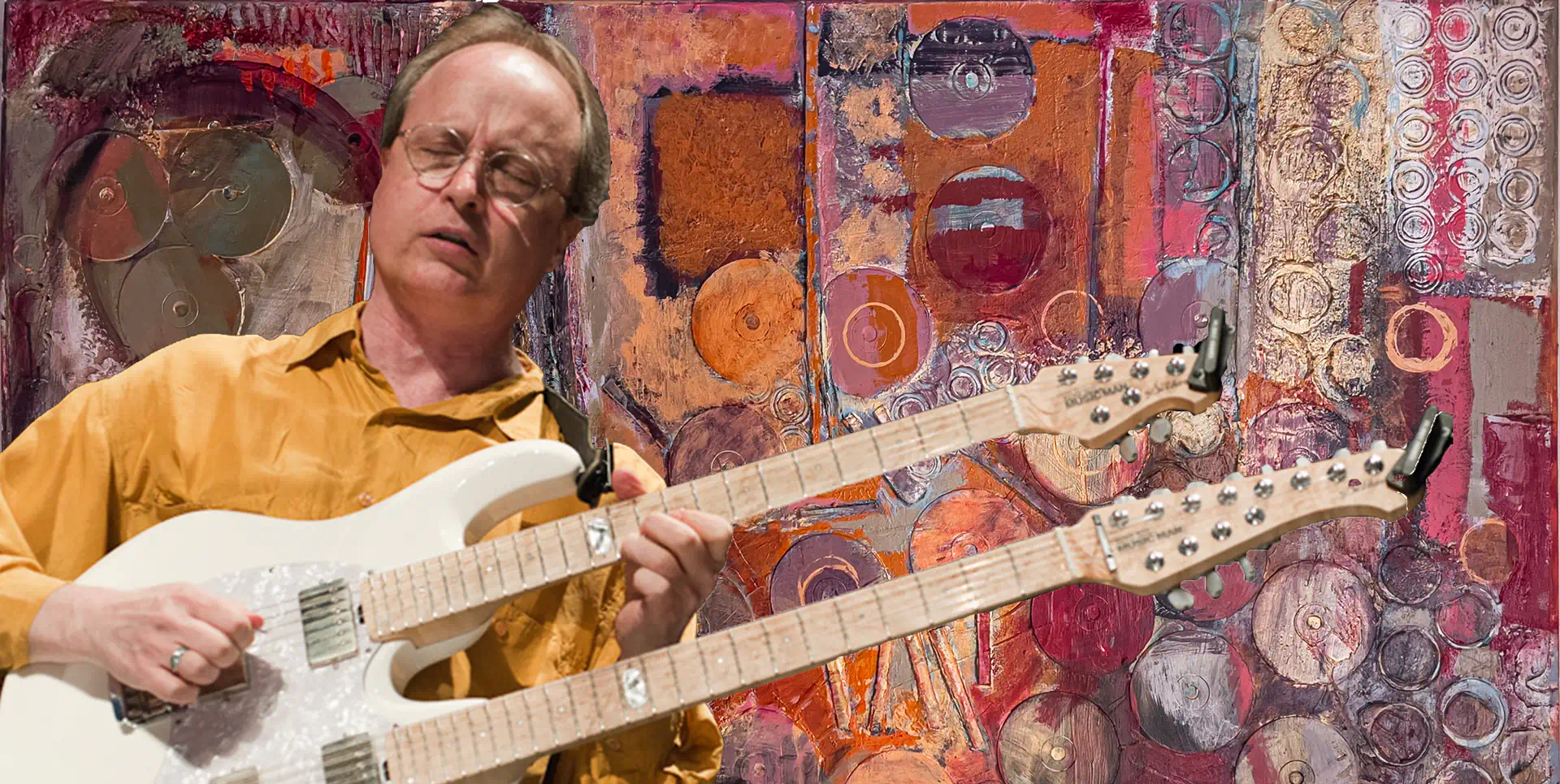
The Ultimate Guide to Octatonics and Bebop Scales
Master the “New Path” to Modern Linear Phrasing and Harmonic Symmetry
Welcome to the Bebop & Octatonic Scale Mastery section of Muse-Eek. This category is dedicated to the specialized study of eight-note structures—a critical “New Path” for any musician looking to master linear phrasing and sophisticated jazz improvisation vocabulary.
While traditional Western theory often focuses on seven-note heptatonic scales, the leap to 8-note scales is what defines the professional “Bebop sound” and the modern textures of fusion and rock. Here, we move beyond basic patterns to explore the mathematical symmetry and rhythmic perfection that octatonic systems provide.
What You Will Discover in This Category:
The 124 Bebop Scales: Most players only know two or three bebop scales. This collection reveals the full spectrum of 124 permutations, teaching you how to use chromatic passing tones to ensure chord tones always land on the downbeat.
495 Octatonic Permutations: Explore the vast universe of 495 possible eight-note scales. Using Pitch Class Set (PCS) theory, we simplify these into 29 Prime Forms, making complex harmonic data manageable and actionable.
Advanced Application & Phrasing: From Segmenting Bebop Scales with approach notes to mastering the Tertial Octatonics used by icons like Allan Holdsworth, these resources bridge the gap between abstract theory and real-world performance.
Rhythmic Symmetry: Learn why 8-note scales are the secret to maintaining a perfect “pocket” in 4/4 time, allowing for seamless tension and release in your solos.
Whether you are a jazz traditionalist or a fusion explorer, these courses provide the technical drills, MIDI files, and structural insights needed to revolutionize your approach to the fretboard or keyboard. Dive into our Ultimate Guide to Octatonics and Bebop Scales to begin your journey toward total melodic and harmonic mastery.
Octatonic and Bebop Resource Guide Index
Click any title below to jump directly to that study deep-dive.
Where to Use Them: Common Progressions
- Major ii-V-I: Use the Dorian Bebop on the ii chord and the Dominant Bebop on the V chord. This ensures your transition from the b7 of the ii chord to the 3rd of the V chord is smooth and rhythmically perfect.
- Minor ii-V-I: This is where Octatonic Symmetrical Diminished scales shine. Over the V7alt chord (like a G7b9), the symmetrical diminished scale provides the b9, #9, and #11 tensions that define the modern jazz sound.
- Static Dominant Chords: In funk or fusion (like a static C7 groove), the Mixolydian Bebop allows you to play long, continuous descending lines that never lose their “pocket” because the root always returns to the downbeat every two measures.
Advanced Bebop Scale Substitutions
Once you are comfortable with the standard application of bebop scales, the next step in your jazz improvisation vocabulary is learning how to “substitute” one scale for another to create sophisticated tension. This is a hallmark of the modern “New Path” approach.
The Minor-Major Swap: One of the most effective substitutions is playing a Melodic Minor Bebop scale over a dominant chord starting from the same root. For example, over a C7 chord, try playing the C Melodic Minor Bebop scale. This naturally highlights the natural 7th against the b7 of the chord, creating a sophisticated “shifting” sound often heard in the playing of Joe Henderson.
The Tritone Substitution: You can also apply the tritone principle to your 8-note scales. If you are playing over a G7 chord, try using the Db Dominant Bebop scale. Because both scales share the same 3rd and 7th (just inverted), the extra chromatic notes in the Db scale will function as altered tensions (b9, #11) over the G7. This is the fastest way to add “outside” flavors to your linear phrasing while keeping your rhythmic placement perfectly symmetrical.
Foundations & Bebop Methods
-
124 Bebop Scales & Their Application
Popular -
Segmenting Bebop Scales
Core -
Bebop Scales with Approach Notes
Advanced
Octatonic Theory & Practice
-
495 Eight-Note Scales Encyclopedia
Encyclopedia -
Diatonic Octatonic Chords
Harmony -
Tertial Octatonics (Tetrad Pivots)
Popular
Practice Guidance
Foundations & Bebop Methods
The logic of the “Jazz Sound.” Bebop scales are the bridge between linear scale runs and functional chordal playing. By adding one chromatic note, you unlock a world of perfect rhythmic placement.
Foundations & Bebop Methods
The Logic of the “Extra” Note
Understanding the “Extra” note is the key to rhythmic mastery. When moving from a typical seven-note scale to an eight-note **octatonic** or **bebop** system, there are crucial differences in how that added pitch functions.
An octatonic scale is essentially a seven-note scale with an added pitch. By identifying the seven-note “subsets” hidden within an eight-note scale, you gain immediate insight into where that scale will sound best. While my courses provide this detailed structural mapping for you, the process is simple: first, listen to the key you are in; second, pick a functional seven-note scale that works; and third, branch into octatonic scales that contain that seven-note scale as a subset. This method yields incredibly interesting and modern results.
On the other hand, **Bebop scales** are traditionally designed to ensure chord tones land on the downbeats. Any scale you choose in this style must conform to this rhythmic logic to sound authentic. However, the end result isn’t always about strictly outlining changes. In contexts like free improvisation, you can use the Bebop scale as a unique melodic effect, exploring the sound of the eight-note structure without the constraints of traditional functional harmony.
Midi Files Included
Bebop Scales: 124 Bebop Scales and Their Application

Most musicians work with only a handful of Bebop scales. This course reveals that there are 124 useful Bebop scales. By following the logic of adding one chromatic note to common seven-note structures, you gain total control over the Bebop sound across every musical situation.
Course Highlights:
- Deep Integration: Learn how all 124 scales relate back to the 29 Eight-Note Prime Forms through Pitch Class Set Theory.
- Rhythmic Mastery: Master the technique of placing chord tones on the downbeat for a professional jazz flow.
- Comprehensive Assets: Includes a 95-page PDF, 495 MIDI files, and Jam Tracks in all 12 keys.
11,904 Exercise Files
Segmenting Bebop Scales

Segmenting is the secret weapon of modern jazz phrasing. By breaking the scale into 5-note groups and adding 3-note approach figures, you transform predictable scale runs into sophisticated, “anticipating” lines that sound like they’re coming off a classic record.
- Much more useful application: Segmenting allows the scale to be played in multiple places creating interesting new melodic phrases.
- Rote Internalization: Massive library of PDFs and MIDI files to help you automate these movements in all keys.
11,904 Exercise Files
Segmenting Bebop Scales with Approach Notes

Segmenting is the secret weapon of modern jazz phrasing. By breaking the scale into 5-note groups and adding 3-note approach figures, you transform predictable scale runs into sophisticated, “anticipating” lines that sound like they’re coming off a classic record.
- Phrasing Shifts: Approach the Bebop scale before beat one to totally change your melodic flow.
- Rote Internalization: Massive library of PDFs and MIDI files to help you automate these movements in all keys.
Octatonic Theory & Practice
The architecture of melody and symmetry. Octatonic scales provide the exotic, symmetrical sounds used by fusion masters like Allan Holdsworth and contemporary classical composers.
744 Pages of PDFs
495 Eight-Note Scales in All 12 Keys

Explore the full universe of octatonic possibilities. While the diminished scale is common, there are 495 total eight-note scales. This course organizes them through Pitch Class Set theory, reducing the overwhelming volume into 29 Prime Forms.
- Structural Insights: Master internal structures, chords, and available tensions for every possible 8-note combination.
- Compositional Inspiration: List of compositions and composers (including Allan Holdsworth) who utilize these scales.
Chordal Symmetry
Octatonic Chords: Diatonic 8-Note Harmony

How do you harmonize an eight-note scale? Traditional music theory focuses on seven-note diatonic harmony, but the Octatonic universe requires a different approach. This course explores how to derive 3 and 4-note chords (tetrads) directly from octatonic structures.
- Diatonic Analysis: See the chords that naturally occur within the Diminished and Symmetrical Diminished systems.
- Modal Movement: Learn to play these chords modally up and down the guitar neck or piano to create head-turning modern textures.
- Vertical Mastery: Move beyond linear playing by internalizing the vertical “stacks” found in each of the 29 Prime Forms.
267 Page Method
Tertial Octatonics: The “Two Tetrad” Method
Want to create a modern sound from those tired old arpeggios? Tertial Octatonics is the answer. By combining two common 7th chords (tetrads), you can form complete Octatonic scales that are much easier to access and sound significantly more modern than standard linear runs.
What this course covers:
- Comprehensive Pairs: Every possible combination of two 7th chords that form an Octatonic scale, covering Major 7, Dominant 7, Minor 7b5, and more.
- Targeted Practice: Exercises for over 11 common chord types (page 4 to 267) including Dominant 7b5 and Minor Major 7.
- The Modern Sound: Hints and applications to use these structures over Dominant 7th and 7sus4 key centers for a “liquid” modern texture.
How to Choose the Right 8-Note Scale
Choosing between a Bebop scale and an Octatonic scale depends entirely on your musical intent. While both are eight-note structures, they function differently within a harmonic progression. Understanding these nuances is the hallmark of a mature improviser.
1. The Bebop Intent (Linear Flow)
Use Bebop scales when your goal is linear clarity. Because Bebop scales are designed to put chord tones on the downbeats, they are the best choice for “straight-ahead” jazz playing where you want to clearly outline the harmony while maintaining a fluid, eighth-note stream.
Primary Rule: If the chord change lasts for at least one full measure, a Bebop scale allows you to “spell out” the chord (1, 3, 5, 7) rhythmically. This is the “Bebop Effect” that makes your lines sound authentic to the era of Charlie Parker and Bud Powell.
2. The Octatonic Intent (Modern Color)
Use Octatonic scales (like the Symmetrical Diminished) when you want harmonic tension and modern texture. These scales are built on symmetrical intervals, which creates a “shifting” sound that doesn’t resolve as predictably as a Bebop scale.
Primary Rule: Use these over dominant chords to add “outside” colors like the #9, b9, or #11. They are also excellent for modal “planing,” where you move the same chord voicing up or down in minor thirds—a staple of fusion and modern jazz piano.
The “Previous Sound” Principle
One critical concept explored in the Scale Analysis course is how the previous sound affects your choice. For example, if a previous chord contained a b5 or a b6, selecting a Bebop scale that also features those degrees will make your transition sound much more logical and “musical” to the listener.
Always analyze the internal structure of the scale. A scale like #115 (Lydian Dominant Bebop) features both the #4 and the b7, making it the perfect tool for a IV7 chord in a blues or a dominant chord that doesn’t resolve to the tonic.
The 29 Octatonic Prime Forms
By using Pitch Class Set Theory, we can simplify the massive universe of 495 scales into 29 parent structures. Understanding these Prime Forms is the key to 8-note mastery.
Modern Applications: Holdsworth and Messiaen
The “New Path” approach bridges the gap between 20th-century classical theory and modern fusion. Oliver Messiaen’s Modes of Limited Transposition and Allan Holdsworth’s Jazz Dominant textures both rely on the symmetrical beauty of the octatonic system…
Appendix: 124 Bebop Scale Reference
This list identifies the 124 primary Bebop permutations. The Chord Structure column identifies the 4-note structure formed by the 1st, 3rd, 5th, and 7th scale degrees.
| # ID | Scale Degrees (Intervals) | Chord Structure (1,3,5,7) | Common Name / Note |
|---|---|---|---|
| 81 | 1, 2, 3, 4, 5, b6, 6, 7 | 1, 3, 5, 6 | Major Bebop |
| 51 | 1, 2, 3, 4, 5, 6, b7, 7 | 1, 3, 5, b7 | Dominant Bebop |
| 48 | 1, 2, b3, 3, 4, 5, 6, b7 | 1, b3, 4, 6 | Dorian Bebop |
| 75 | 1, 2, b3, 4, 5, b6, 6, 7 | 1, b3, 5, 6 | Melodic Minor Bebop |
| 83 | 1, 2, b3, 4, 5, b6, b7, 7 | 1, b3, 5, b7 | Harmonic Minor Bebop |
| 49 | 1, 2, 3, 4, b5, 5, 6, 7 | 1, 3, b5, 6 | Lydian Bebop |
| 104 | 1, b2, 3, 4, 5, b6, b7, 7 | 1, 3, 5, b7 | Mixolydian b2, b6 Bebop |
| 42 | 1, b2, b3, 3, b5, b6, b7, 7 | 1, b3, b5, b7 | Altered Bebop |
| 87 | 1, 2, 3, 4, b5, 5, 6, 7 | 1, 3, b5, 6 | Whole Tone Bebop |
| 1 | 1, b3, 3, 4, b5, 5, b6, 6 | 1, 3, b5, b6 | Non-Traditional (*) |
*Note: The full 124 list continues with permutations for every possible 7th chord quality. Reference the Bebop Scales course for the complete 11,000+ exercise file set.
Appendix: Essential Octatonic Scale Reference
While there are 495 possible combinations, these are the high-utility octatonic scales used in modern Jazz, Fusion, and 20th-century classical music. Use these to move beyond traditional “scale-wise” sounds.
| Scale Type | Scale Degrees (Intervals) | Prime Form / PCS | Best Application |
|---|---|---|---|
| Symmetrical Diminished | 1, b2, b3, 3, b5, 5, 6, b7 | 0, 1, 3, 4, 6, 7, 9, T | Dominant 7th (Altered) |
| Diminished (Whole-Half) | 1, 2, b3, 4, b5, b6, 6, 7 | 0, 2, 3, 5, 6, 8, 9, E | Diminished 7th Chords |
| Holdsworth Jazz Major | 1, 2, 3, 4, 5, b6, 6, 7 | 0, 1, 3, 4, 5, 7, 8, T | Major 7th / Major 6th |
| Holdsworth Jazz Dominant | 1, 2, 3, 4, 5, 6, b7, 7 | 0, 1, 2, 3, 5, 7, 8, T | Dominant 7th / 7sus4 |
| Mixob2b6 Bebop | 1, b2, 3, 4, 5, b6, b7, 7 | 0, 1, 2, 3, 5, 6, 8, 9 | Dominant 7 (b9, b13) |
| Locrian Nat 2 Bebop | 1, 2, b3, 4, b5, b6, b7, 7 | 0, 1, 2, 4, 5, 7, 8, T | Minor 7b5 Chords |
| WT Bebop (Messiaen 6) | 1, 2, 3, 4, b5, b6, b7, 7 | 0, 1, 2, 4, 6, 7, 8, T | Whole Tone / Dominant #5 |
For the complete listing of all 495 scales, including MIDI files and key-by-key transpositions, please refer to the “495 Eight-Note Scales” course materials.
Expert FAQ & Practice Guidance
Common hurdles and professional strategies for mastering 8-note scales, straight from Bruce Arnold’s experience at Berklee and beyond.
Ready to Begin Your 8-Note Journey?
Mastering these scales is a lifetime pursuit, but the results in your playing are immediate. Whether you’re using the 124 Bebop Scales for authentic jazz flow or Tertial Octatonics for modern fusion, the “New Path” starts here.
The 8-Note Mastery Roadmap: A 90-Day Plan
Mastering 495 scales can feel like an impossible task. The secret is not to learn more, but to learn deeper. Follow this structured roadmap to integrate these sounds into your DNA.
Phase 1: The Foundation (Days 1-30)
Focus exclusively on the Major and Dominant Bebop scales.
- The Drill: Play one key per day following the Cycle of 5ths.
- The Goal: Use the “walking recitation” method to say the note names aloud while playing. Ensure chord tones (1, 3, 5, 7) always land on the beat.
Phase 2: Symmetrical Immersion (Days 31-60)
Introduce the Symmetrical Diminished and Whole Tone Bebop scales.
- The Drill: Practice 3-notes-per-string patterns on guitar or “pivoting” tetrads on piano.
- The Goal: Transition from a ii-V-I using a Bebop scale on the ‘ii’ and a Symmetrical Diminished on the ‘V’. Listen for the “tension shift.”
Phase 3: Vocabulary & Application (Days 61-90)
Start Segmenting and using Approach Notes.
- The Drill: Write out one 16-bar solo per week over a standard like “Autumn Leaves” or “Blue Bossa” using only 8-note segments.
- The Goal: Break out of “scale-wise” playing. If you feel burnt out, move to the Tertial Octatonics and explore the world of tetrad pivots.
“Consistency beats intensity. One key, fifteen minutes, every single day.” — Bruce Arnold
Glossary of 8-Note Concepts
To master the “New Path,” you must understand the terminology that bridges traditional jazz theory and modern pitch class analysis. Use this glossary as a quick reference guide.
- Approach Note Figure
- A melodic ornamentation technique where a target note (usually a chord tone) is preceded by one or more non-harmonic tones. In 8-note phrasing, a 3-note approach figure is often used to delay the start of a scale until a specific downbeat, creating a more sophisticated, “anticipating” rhythmic feel.
- Bebop Chord
- The four-note structure formed by the 1st, 3rd, 5th, and 7th degrees of a bebop scale. The genius of the 8-note bebop system is that it allows these “Bebop Chord” tones to land consistently on downbeats, providing a strong harmonic foundation during rapid linear runs.
- Cycle 5 (Cycle of Fifths)
- The movement of root notes in descending perfect fifths (C, F, Bb, Eb, etc.). This is the primary practice vehicle for jazz musicians, as it mimics the most common functional harmonic movement (V to I) found in the Great American Songbook.
- Pitch Class Set (PCS)
- A method of musical organization that treats notes as numbers (0-11). By using Pitch Class Sets, we can identify the “Prime Form” of a scale—its most basic structural identity—allowing us to see the relationship between 495 different scales and their 29 parent structures.
- Prime Form
- The most compact version of a Pitch Class Set. Identifying the Prime Form of an 8-note scale is essential for “New Path” students because it simplifies complex harmonic data into manageable, mathematical patterns that can be transposed to any key.
- Symmetrical Diminished
- An 8-note scale built on an alternating pattern of half-steps and whole-steps (or vice versa). Because of its perfectly symmetrical structure, this scale creates a highly modern, “ambiguous” sound that is widely used in fusion, rock, and modern jazz to provide altered tensions over dominant chords.
- Tetrad
- A four-note chord or melodic structure. In the study of Tertial Octatonics, we break an 8-note scale into two distinct tetrads. Pivoting between these two four-note groups is a key technique for breaking out of linear, scalar habits and creating angular, modern lines.
- Tritone Substitution
- A harmonic concept where a dominant chord is replaced by another dominant chord located a tritone (six semitones) away. In an 8-note context, applying a tritone substitution to your bebop scale choice allows for sophisticated chromaticism while maintaining the same rhythmic resolution.